Table Of Contents
Major Changes To Arizona Family Law In Cases With Domestic Violence
Domestic violence is an unfortunate part of reality, although it has long been swept under the rug in legal matters. But when domestic violence is ignored, it can result in serious physical harm or even death for those involved. That’s why Arizona lawmakers chose to introduce a new act aimed at limiting custody rights for parents who have engaged in domestic violence. This change could significantly impact the outcome of your Arizona child custody matter. Read on for more information about this law, and if you have concerns about how it might affect your case, call our firm for your free consultation at 480-470-1504 for more information.

The Alec and Lydia Act
Unfortunately, Arizona’s new family law got its name from two children who lost their lives to domestic violence. Governor Katie Hobbs signed this law, also known as HB 2995, in June 2026. In 2024, Alec and Lydia were killed by their father, who then turned the gun on himself, during his court-ordered parenting time. This parenting time was granted despite a documented history of domestic violence by the father. After their deaths, their mother, Hope Hooton, fought to change Arizona’s child custody law to hopefully prevent other families from living her experience.
The Alec and Lydia Act makes four major changes to how Arizona family law works. First, it defines coercive control and designates it as a form of abuse. Second, it creates a rebuttable presumption that it is against the child’s best interests to award custody to a parent with a history of domestic violence. Third, it changes the standard for appellate review to de novo, so they don’t have to give deference to the prior judge. Lastly, it specifies that the child’s safety prioritizes the 50/50 custody presumption in Arizona family law.
Coercive Control
The Alec and Lydia Act was created to protect families in coercive control domestic violence situations. So what exactly is coercive control? Coercive control can fly under the radar longer than other types of domestic abuse because it typically isn’t physical in nature. It is a more nuanced form of intimidation and manipulation. The definition provided by HB 2995 is “a pattern of threatening, humiliating, or intimidating actions that is used to harm, punish, or frighten a person.” These patterns include the following:
- Taking away a person’s freedom or liberty
- Stripping a person’s sense of self, bodily integrity, and human rights
- Isolating a person from friends and family
- Depriving a person of independence
- Regulating a person’s everyday behavior
- Monitoring, surveilling, regulating, or controlling a person’s finances, economic resources, or access to services, or those of the person’s child or relative
- Monitoring, surveilling, regulating, or controlling a person’s activities, communications, or movements, including through the use of technology, or those of a person’s child or relative
- Name-calling, degrading, or demeaning a person or the person’s child or relative on a frequent basis
- Threatening to harm or kill a person or the person’s child or relative, including wearing, accessing, displaying, using, or cleaning a weapon in an intimidating or threatening manner
- Threatening to commit suicide or self harm, when used as a method of coercion, control, punishment, intimidation, or retaliation against a person
- Threatening to harm or kill an animal that a person or the person’s child or relative has an emotional bond with
- Threatening to publish a person’s sensitive personal information, including sexually explicit material, or those of the person’s child or relative
- Threatening to make reports to law enforcement without reasonable cause
This list may start to sound familiar if you or someone you know has ever been in a toxic relationship. Now they have been defined under Arizona law as coercive control and a form of domestic abuse.
Child’s Best Interests
In Arizona, the standard for child custody has always been what serves a child’s best interests. Even the presumption that parents should have 50/50 custody is because of the underlying belief that it is in the child’s best interest. But the Alec and Lydia Act forces Arizona family law judges to prioritize a child’s safety over everything when making custody determinations. One of the ways it revised Arizona’s child custody law was by adding the following provision:
- An allegation of an act or acts of domestic violence as defined in Section 25-403.03 shall be a primary factor in the court’s consideration of modification of a legal decision-making or parenting time order. The court shall allow a parent to present evidence of an act or acts of domestic violence that occurred before the existing legal decision-making or parenting time order.
So, if it can be shown that a parent engaged in domestic violence, that can outweigh the best interest factors previously used to determine child custody orders. When the domestic violence occurred, compared to when child custody orders were issued, is irrelevant. A parent can introduce evidence of domestic violence that occurred before or after the last child custody orders were issued. But what were the best interest factors that were previously the top priority in Arizona child custody cases?
Arizona’s best interest factors for legal decision-making and parenting time determinations can be found in A.R.S. § 25-403. They are those that support the child having a happy and healthy development, like:
- The child’s adjustment to home, school, and community
- The child’s previous, present, and potential future relationship with each parent
- The child’s relationship with siblings, household members, and other people who could significantly affect their best interests
- The mental and physical health of all individuals involved
- Which parent is more likely to allow significant and meaningful contact between the child and the other parent
- If the child is of a suitable age and maturity, their own wishes
Pros and Cons of These New Arizona Family Law Changes
It’s hard to criticize legal changes that are meant to protect children from harm, but we don’t always know how effective these changes will be. Every bill faces some opposition due to the potential drawbacks that could occur when the law takes effect. Some of the pros and cons of the Alec and Lydia Act can be found below.
| PROS | CONS |
|
|
Have an Arizona Child Custody Matter Involving Domestic Violence? Don’t Hesitate to Consult with an Experienced Family Law Attorney.
The Alec and Lydia Act was passed to help keep Arizona’s children in active custody matters safer. But if there have been allegations of domestic violence in your situation, whether or not they are true, it could have a significant impact on the judge’s decision for your child custody orders. If you don’t fight to protect your parental rights, you could lose out on years with your children. With all that potential risk, this is not the type of legal matter to roll the dice and proceed with under self-representation. Family law can be emotionally charged, so it’s beneficial to retain an attorney to be your point of communication and your legal advisor during child custody matters in Arizona. Our team specializes in helping Arizona families with child custody, divorce, child support, and more through guidance from an Arizona family law attorney. Don’t start your child custody case without speaking to at least one attorney about your situation. You can do it with our firm with no cost or obligation, schedule your free consultation today by calling 480-470-1504.

MY AZ LAWYERS
Email: [email protected]
Website: www.myazlawyers.com
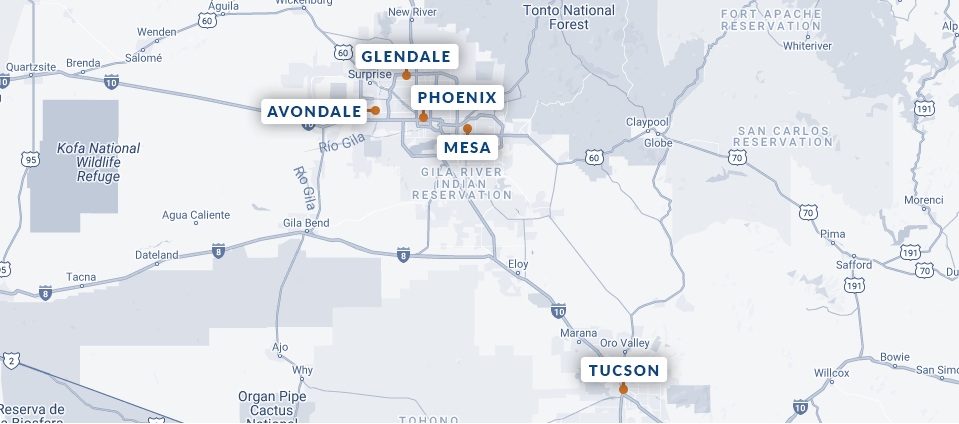
Mesa Location
1731 West Baseline Rd., Suite #100
Mesa, AZ 85202
Office: 480-448-9800
Phoenix Location
343 West Roosevelt, Suite #100
Phoenix, AZ 85003
Office: 602-609-7000
Glendale Location
20325 N 51st Avenue Suite #134, Building 5
Glendale, AZ 85308
Office: 602-509-0955
Tucson Location
2 East Congress St., Suite #900-6A
Tucson, AZ 85701
Office: 520-441-1450
Avondale Location
12725 W. Indian School Rd., Ste E, #101
Avondale, AZ 85392
Office: 623-469-6603