Table Of Contents
Timing The Selling Of The Marital Home During Divorce In Arizona
Married couples spend years facing life’s obstacles and building an estate together. Despite all of the emotional investment that goes into marriage, about half of marriages end in divorce. There may be a great deal of property that needs to be divided to complete a divorce, and retaining every single marital asset might not be feasible after splitting into two separate households. Selling assets is a common reality of divorce, especially in a community property state like Arizona. But when to sell a marital asset, such as the marital home, and how to go about it are more complicated issues. Read on to learn more about them, and if you have additional questions, our firm offers free consultations by phone. Schedule your free appointment with an experienced Arizona divorce lawyer today by calling 480-470-1504.

The Preliminary Injunction
In Arizona, the divorce process starts when one spouse files a petition for dissolution of marriage, and it is served upon the other spouse. Once the petition has been filed, a preliminary injunction is issued. Preliminary injunctions are set forth under Arizona law by A.R.S. § 25-315. When the preliminary injunction is in place, neither spouse may sell, transfer, encumber, etc., any community property asset without written consent from the other spouse or permission from the court. The statute makes an exception for actions related to a usual course of business, or sales to pay for life necessities or reasonable attorney’s fees. The preliminary injunction also enjoins the parents from taking a child in common out of state or making changes to insurance coverage while the divorce is pending. If either spouse fails to abide by the preliminary injunction, they can be arrested and charged with interfering with a judicial proceeding.
Is It a Community Property Asset?
The preliminary injunction enjoins spouses from selling community property, but doesn’t bar a spouse from doing what they please with their own separate property. It’s crucial to understand the difference between community and separate property if you intend to dispose of any of your property in any way during divorce. The concept of community property is defined under Arizona law by A.R.S. § 25-211. Property acquired during a marriage belongs to both spouses as community property, except for gifts and inheritance. Property acquired before marriage or after a petition for dissolution of marriage, separation, or annulment has been filed is separate property. But things become more complicated if a separate asset is commingled with community property funds, or vice versa. For example, one spouse may have put a down payment on a home and made mortgage payments for a few years as a single individual. But after getting married, both spouses’ incomes become community property, which usually translates to the mortgage payments being made with community property funds. The equity gained with community property funds becomes commingled community property that must be split in property division if the couples ever get divorced. Looking back historically through payments and determining how much of the house is community and separate property can become contested issues.
Frequently Asked Questions
Can we sell our marital home during divorce if it is at risk of foreclosure?
This is exactly the type of scenario where the judge may allow the preliminary injunction to be lifted to proceed with a home sale. The foreclosure would put both spouses in a much worse position financially, and mortgage payments aren’t more likely to be made after a divorce. The spouses also don’t need court permission if they both agree in writing to sell their home to avoid foreclosure.
What is the ordinary course of business in the context of a preliminary injunction?
There is an exception to preliminary injunctions for spouses selling or transferring assets in the ordinary course of business. For someone who runs a business or regularly buys and sells items to make extra cash, the preliminary injunction should not preclude them from their usual activities. But a spouse who works 9-5 at an office can’t suddenly decide to sell off shared belongings in a garage sale during divorce. If a spouse is accused of inappropriate business dealings in violation of the preliminary injunction, they may need to show proof of previous business dealings to show the transaction was in line with an established pattern.
What kinds of extra expenses should I expect if I sell my home during a divorce?
Divorce is already infamously expensive without factoring in expenses from a home sale. Finding a new living situation after a divorce can also be a costly endeavor. A home sale will require costs like staging, inspections, and broker’s fees, and the proceeds could be subject to capital gains taxation. These kinds of situations may require more experienced realtors who are knowledgeable about working with divorcing spouses.
Is it possible for one party to keep the home and avoid a home sale?
The answer to this depends on how much equity is in the home and how many other assets there are in the community estate to split. For example, if the spouses equally contributed $60,000 so far towards the home’s equity, one spouse could theoretically keep the home if there were $30,000 worth of other assets, like cars or funds from bank accounts, to award the other spouse. But agreeing over who gets to keep the house can increase legal costs. If both spouses have an equal share in the home, the court may be more likely to award the home to a spouse who is a primary caregiver for any children in common. If one spouse can’t afford to buy out the other spouse’s community property share, a home sale may be necessary. The spouse should also confirm that they will be able to afford homeownership costs as a single individual, such as maintenance and repairs, property taxes, HOA fees, and insurance coverage.
Should we sell our home before filing for divorce?
This strategy only works if the spouses are open and honest about their plans for the future, so they can proceed with divorce amicably. Some advantages of selling before divorce is that it removes an issue to resolve during property division, and it gives the spouses an influx of cash to start their new separate households. Selling a home is also stressful, and more stress is the last thing two spouses need while going through a divorce.
If we are ordered by the judge to sell our home, when does that need to be completed?
There are no laws in effect specifying exactly when divorced spouses must sell their marital homes. However, the spouses can agree to a timeline in a settlement, or the court can issue a deadline in its ruling. Otherwise, the house simply must be sold within a “reasonable” amount of time.
Navigate The Complexities Of Selling a Home During Divorce With Our Arizona Family Law Team
Your marital home could be full of family memories, but also painful memories that come with unmanageable costs and maintenance needs. Dividing into two households may make it absolutely necessary to sell your marital home. Working around the preliminary injunction and accounting for the sale properly in property division become simpler when assisted by a skilled divorce attorney. It can be extremely difficult or even impossible to take back decisions made during the divorce process. Make them with experienced guidance by retaining the top rated Arizona law office, My AZ Lawyers, for your family law matter. We offer competitive rates and free consultations by phone to get started. Schedule your free consultation today by calling 480-470-1504.

MY AZ LAWYERS
Email: [email protected]
Website: www.myazlawyers.com
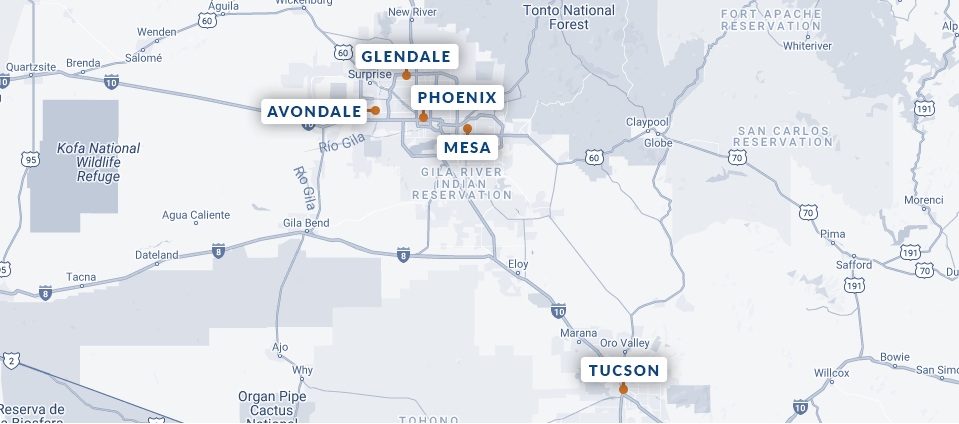
Mesa Location
1731 West Baseline Rd., Suite #100
Mesa, AZ 85202
Office: 480-448-9800
Phoenix Location
343 West Roosevelt, Suite #100
Phoenix, AZ 85003
Office: 602-609-7000
Glendale Location
20325 N 51st Avenue Suite #134, Building 5
Glendale, AZ 85308
Office: 602-509-0955
Tucson Location
2 East Congress St., Suite #900-6A
Tucson, AZ 85701
Office: 520-441-1450
Avondale Location
12725 W. Indian School Rd., Ste E, #101
Avondale, AZ 85392
Office: 623-469-6603