Table Of Contents
Selling the Marital Home During Divorce in Arizona: Timing, Rights & Options
Your home is likely the largest asset in the marital estate and one of the most contested decisions in an Arizona divorce. Whether you sell immediately, execute an equity buyout, or defer the sale until the kids are grown affects your tax liability, your credit, and your financial foundation for years after the divorce is final. Arizona’s community property laws, the automatic preliminary injunction that freezes the estate the moment a petition is filed, and the federal capital gains rules under IRS Publication 523 all interact to determine what your options are, and which path is most financially sound.
This guide walks through each stage of the process under current Arizona law, integrates real Q1/Q2 2026 Maricopa County housing market data, and explains the three primary pathways your attorney will likely discuss. If you have questions specific to your situation, our firm offers free consultations by phone. Call 480-470-1504 to speak with an experienced Arizona divorce attorney today.

The Preliminary Injunction: What Freezes the Moment You File
In Arizona, the divorce process starts the moment one spouse files a petition for dissolution of marriage. That filing triggers an automatic preliminary injunction under A.R.S. § 25-315. The injunction takes effect against the petitioner immediately upon filing, and against the respondent the moment they are served.
While the injunction is active, neither spouse may sell, transfer, encumber, conceal, or otherwise dispose of any community property asset without the written consent of the other spouse or permission from the family court. For the marital home, this means no unilateral listing agreement, no deed transfer, and no cash-out refinance. Violating the preliminary injunction isn’t a civil matter. A peace officer may arrest a spouse, with or without a warrant, if there is probable cause to believe the injunction has been violated.
What the preliminary injunction does not prohibit
The statute carves out narrow exceptions. You may sell or transfer community assets if the transaction falls within the usual course of business, is necessary to provide for basic life necessities, or is used to pay reasonable attorney fees for the divorce itself. That last exception matters. If you can’t afford legal representation, you may petition the court to authorize the use of community funds, including home equity through a HELOC, to pay your attorney.
The preliminary injunction also prohibits either parent from relocating a minor child out of state without court approval and bars changes to insurance coverage while the dissolution is pending.
“Alison and Sarah have absolutely been delightful to work with. They have answered every question I have ever had on my divorce — they make the difficult times a little more bearable.”
— Cynthia Salazar, 5-star Google review
Community Property vs. Separate Property: Does It Affect the Home?
The preliminary injunction covers community property only, not your separate property. Under A.R.S. § 25-211, any property acquired during the marriage belongs to both spouses equally as community property, with limited exceptions for gifts and inheritance.
Homes frequently blur the community/separate boundary through a legal principle called commingling. Here’s a common scenario: one spouse owned the home before the marriage and paid the mortgage with pre-marital funds for two years. After the wedding, the couple’s combined income (which is community property) became the source of mortgage payments. The equity built with community funds is community property, even though the home started as separate property. Untangling the separate and community shares requires tracing every payment historically, which can become a major point of litigation.
The same principle applies to inherited down payments. Under A.R.S. § 25-213, inherited funds remain separate property, but once deposited into a joint account or used alongside community funds, commingling begins. A family law attorney with property tracing experience is essential when significant separate property contributions complicate the home’s ownership structure.
What Arizona Courts Can Order: A.R.S. § 25-318 and the Special Real Estate Commissioner
When spouses can’t reach an agreement on the marital home, the family court’s authority under A.R.S. § 25-318 becomes the controlling mechanism. The statute grants the court broad power to divide community property equitably and to order a forced sale of the marital residence when no buyout is feasible.
The Special Real Estate Commissioner
When one spouse refuses to sign a listing agreement, stonewalls price negotiations, or ignores court orders to cooperate with a sale, the court uses Rule 95G of the Arizona Rules of Family Law Procedure to appoint a Special Real Estate Commissioner. This commissioner is a licensed real estate professional granted full legal authority to list the property, evaluate offers, and execute closing documents on behalf of the non-compliant spouse, without that spouse’s signature.
The stakes of non-compliance extend beyond the forced sale itself. In the Arizona Court of Appeals case Alvares v. Munguia, a husband was ordered to buy out his former wife’s equity share but refused to act for five years. The court appointed a Special Real Estate Commissioner to force the sale. Because the property had appreciated during the delay, the wife was awarded 50% of the current value, not the lower value at the time of the original decree. It’s expensive.
Can the court delay the sale for the children’s sake?
Yes. Under A.R.S. § 25-318(B), an Arizona family court may defer the sale of the marital home to allow minor children to remain in the family residence through a defined period, typically until the youngest child reaches the age of majority or completes high school. Any deferred-sale agreement must specify who pays carrying costs, how major repairs are funded, and exactly when the sale trigger occurs. The tax implications of a deferred sale are significant and are covered in the Pathway 3 section below.
The 2026 Maricopa County Housing Market: What Divorcing Sellers Are Actually Facing
The legal framework for selling a marital home during divorce doesn’t change based on market conditions. Your financial exposure absolutely does. The 2026 Phoenix metro market is materially different from the seller’s market of 2021 and 2022, and divorcing couples need to plan accordingly.
As of Q1/Q2 2026, data from ARMLS, Redfin, and Zillow shows:
- Median sale price: $455,000 to $481,370 (ARMLS/ShowingTime), relatively stable year-over-year
- Median days on market: 51 to 84 days before closing (Redfin/ARMLS), dramatically longer than the pandemic-era pace
- Active inventory: 25,000+ listings in Maricopa County; statewide supply exceeding 37,000 units
- Sale price vs. list price: Over 63% of Phoenix homes sold below their initial asking price in early 2026
- Listings that fail to sell: Approximately 25% of active listings do not transact
For divorcing couples, a 51-to-84-day listing period means both spouses continue to share joint mortgage obligations, property taxes, HOA fees, and maintenance costs for up to three months while simultaneously funding two separate households and paying attorney retainers. If the home isn’t in move-in condition, Maricopa County buyers in 2026 are demanding price reductions rather than accepting cosmetic issues. An aspirationally priced home will sit. Every day it sits costs both spouses money.
Watch: Local Arizona realtor Maegann Yarbrough (AZ Real Estate Geek) breaks down early 2026 housing supply, median days on market, and what shifting buyer leverage means for Phoenix home sellers.

The Sell vs. Keep vs. Delay Decision Framework
Most divorcing homeowners in Arizona face one of three paths. Understanding what each one requires (legally, financially, and tax-wise) is the foundation of any informed decision.
Pathway 1: Sell Immediately (Pre-Decree or Immediate Post-Decree)
If both spouses agree in writing to list the home on the open market, you don’t need court permission. Net proceeds get deposited into an attorney trust account and divided as part of the overall settlement. This is the right call for high-conflict couples who need a clean financial break, for couples where neither spouse can independently qualify for a refinance, and for anyone whose cash reserves can’t sustain joint carrying costs through a three-to-six-month listing period.
The tax angle is the biggest argument for selling before the decree is final. If the sale closes before December 31 of the tax year in which the home sells, the couple can still file a joint return and claim the combined $500,000 IRC § 121 capital gains exclusion. For a home purchased years ago at a much lower cost, that exclusion can shelter hundreds of thousands of dollars from federal taxation. Wait until January 1 of the year after the decree is signed, and each ex-spouse only gets a $250,000 single-filer exclusion instead.
One caution in the current market: with median DOM in Maricopa County running 51 to 84 days, “selling immediately” realistically means three to five months from listing to closing. Price the home accurately at the outset. Overpricing in a soft market means price cuts, stigma, and extended carrying costs for both of you.
Pathway 2: Keep the Home (Equity Buyout)
In an equity buyout, one spouse keeps the house and pays the other for their half of the equity. The keeping spouse refinances the mortgage in their name only, removes the other spouse from the deed, and either pays out the vacating spouse’s community equity share in cash or offsets it against other marital assets of equivalent value (retirement accounts, business interests, or investment accounts).
Two big practical questions decide whether a buyout actually works:
- Can the keeping spouse qualify for the refinance alone? They have to qualify on their own post-divorce income and debt-to-income ratio. In the current higher-rate environment, this is the single most common barrier to a buyout closing.
- Are there enough other marital assets to balance the equity owed? If the keeping spouse doesn’t have cash to buy out the equity share, they have to trade away other assets of equivalent value. Without that liquidity or those offset assets, the buyout collapses back into a sale.
What happens if the keeping spouse drags their feet? A.R.S. § 25-318(D) automatically converts the property to a tenancy in common once the court-ordered timeframe lapses. The out-spouse can return to court and force a sale. As Alvares v. Munguia demonstrates, that out-spouse may also be entitled to half the current appreciated value of the home rather than the decree-date figure. Letting a buyout deadline slide can get expensive.
Pathway 3: Defer the Sale (Delayed Disposition)
Imagine a typical scenario. A couple with two kids in school and a 3.1% pre-2022 mortgage doesn’t want to disrupt the children’s schooling and doesn’t want to refinance into today’s rates. They agree, with the court’s approval, that one parent stays in the home with the kids until the youngest graduates from high school. Title and the mortgage stay joint until then. At the trigger date, the home gets sold and proceeds get split. This is a deferred sale, and it’s become more popular as interest rates have climbed.
A deferred-sale agreement has to spell out the operational details up front: who lives in the home, who pays the mortgage and taxes and HOA fees, how repairs over a certain dollar threshold get funded, and exactly what event triggers the sale. Vague language here breeds litigation later.
The most dangerous trap in this pathway is a tax mistake the parties don’t discover until the home actually sells, often years later. The out-spouse who moved out hasn’t physically lived in the home during the deferred period. Under the standard IRC § 121 two-out-of-five-year rule, they’d fail the use test and owe full federal capital gains tax on their share of the proceeds. The fix is IRC § 121(d)(3)(B), which treats the out-spouse as still using the home during any period their former spouse is granted use of it under a divorce or separation instrument. The catch: this “tacking” provision only activates if the decree explicitly says the in-spouse has exclusive use and possession. A decree drafted without that language can cost the out-spouse up to $250,000 in avoidable taxes. It’s one of the highest-stakes drafting details in any deferred-sale agreement, and it’s the reason you want a family law attorney and a CPA at the same table when the decree is being written.
Watch: Top 1% Phoenix real estate agent Trevor Bragg explores the 2026 shifts in Valley inventory, sales prices, and demand impacting homeowners preparing to sell.

Capital Gains Tax and the Marital Home: What You Need to Know Before You Sign
The federal capital gains rules under IRC § 121 aren’t intuitive. The mistakes made at the divorce decree stage are often discovered only at closing, when it’s too late to fix them.
- $500,000 joint exclusion: Available to married couples filing jointly for the tax year in which the home sells. The couple must have owned and used the home as their primary residence for at least 24 out of the previous 60 months.
- $250,000 individual exclusion: Available to each former spouse after divorce, provided each independently meets the ownership and use tests.
- Filing status is the determining factor: The IRS treats you as your December 31 marital status for the entire tax year. A decree signed on December 30 means you file as single for that entire year.
- IRC § 1041 basis carryover: Transfers of the home between spouses incident to divorce aren’t taxable events. The receiving spouse inherits the original cost basis and faces the full capital gain on any subsequent sale to a third party.
Arizona home values have appreciated significantly over the past decade. Capital gains exposure is a real concern for many divorcing homeowners, not just high earners. Consult a CPA alongside your divorce attorney before any sale is finalized.
“My experience has been great working with My AZ Lawyers to handle my divorce. They are willing to work with you on price and everyone at the firm is knowledgeable. Allison is a great attorney that I would recommend for family law cases.”
— Joshua Lopez, 5-star Google review
Frequently Asked Questions: Selling the Marital Home During an Arizona Divorce
Can we sell our marital home during divorce if it is at risk of foreclosure?
Yes. An imminent foreclosure is one of the strongest grounds for asking a Maricopa County Family Court judge to lift the A.R.S. § 25-315 preliminary injunction and authorize an immediate sale. Both spouses may also agree in writing to sell without court permission. Letting a foreclosure go through would damage both parties’ credit and wipe out the equity. Courts almost always grant relief in these situations.
Can a divorce force the sale of the marital house in Arizona?
Yes. Under A.R.S. § 25-318, an Arizona family court judge has full authority to order a forced sale of the marital residence if the spouses cannot agree on a division. When one spouse refuses to cooperate with the listing or closing process, the court may appoint a Special Real Estate Commissioner under Rule 95G of the Arizona Rules of Family Law Procedure. The commissioner has legal authority to list the property, accept offers, and sign closing documents without the non-compliant spouse’s signature.
Who gets to stay in the house during a divorce in Arizona?
During the pendency of the divorce, either spouse may request a temporary order granting exclusive use and possession of the marital home. Arizona family courts heavily weigh the best interests of any minor children, typically allowing the primary residential parent to remain in the home to preserve stability and school continuity. The court may also consider financial circumstances, domestic violence history, and which party is better positioned to maintain the home during litigation.
Does inherited money used for the down payment affect who owns the home?
Inheritance used as a down payment may be classified as separate property under A.R.S. § 25-213, but that protection erodes through commingling. Once community property funds (meaning income earned during the marriage) are used to make mortgage payments or fund renovations, the community estate accumulates a proportional equity interest. Tracing those separate and community contributions historically is often contested and may require financial expert testimony.
What is the capital gains tax exclusion when selling a home during divorce?
Under IRC § 121, married couples who sell their home while still legally married may exclude up to $500,000 in capital gains on a joint return. If the home sells after the divorce is finalized, each former spouse may individually exclude up to $250,000 of their share of the gain, provided each meets the 2-out-of-5-year ownership and use tests. For large gains, the timing of the sale relative to the final decree date can mean a six-figure difference in federal tax liability.
What happens to the out-spouse’s capital gains exclusion if they move out of the home?
The IRC § 121(d)(3)(B) “tacking” rule protects the out-spouse, but only if the divorce or separation instrument explicitly grants the in-spouse exclusive use and possession of the home. With that language in place, the out-spouse is legally treated as continuing to use the home as their principal residence, preserving their individual $250,000 exclusion even after years of absence. Without this specific language in the decree, the out-spouse may fail the use test and face full capital gains taxation on their share of the proceeds.
What is the ordinary course of business exception to the preliminary injunction?
A.R.S. § 25-315 allows spouses to transfer or sell assets that fall within their established, pre-existing pattern of business activity. A spouse who regularly buys and sells real estate investment properties as a business may continue doing so during the divorce. This exception does not apply to the primary marital residence. Courts require documented proof of a consistent prior business practice; a 9-to-5 employee can’t suddenly liquidate shared belongings and claim the exception.
What extra expenses should I expect if I sell my home during a divorce?
Beyond standard closing costs, divorcing sellers in the Phoenix metro should plan for an extended holding period. Maricopa County homes averaged 51 to 84 days on market in early 2026, meaning continued joint mortgage payments, property taxes, HOA fees, and utilities for both spouses during that window. Pre-sale staging, inspections, and broker commissions add further costs, and if the home sells for a gain exceeding $250,000 per spouse, federal capital gains taxes require advance planning with a tax professional.
Is it possible for one party to keep the home and avoid a home sale?
Yes, through an equity buyout. The keeping spouse refinances the mortgage in their name only, pays the other spouse their community equity share in cash, or offsets it against other marital assets of equivalent value such as retirement accounts or business interests. The keeping spouse has to qualify for the new mortgage on their own and show they can sustain all carrying costs on a single income. If they fail to complete the buyout within the court-ordered timeframe, A.R.S. § 25-318(D) converts the property to a tenancy in common and allows the court to appoint a Special Real Estate Commissioner to force a sale.
Should we sell our home before filing for divorce?
Selling before filing eliminates the asset from the property division process and gives both spouses liquid capital to fund separate households and legal fees. It also lets the couple file a joint tax return for the sale year, preserving the $500,000 IRC § 121 capital gains exclusion, a significant advantage if the home has appreciated substantially. The strategy requires full transparency and mutual cooperation; it works best for amicable separations and should be structured with an attorney’s guidance to ensure proceeds are properly documented.
If a judge orders us to sell our home, when must the sale be completed?
Arizona law doesn’t specify a fixed deadline for a court-ordered home sale. The final decree or settlement agreement typically sets a timeline, often 90 to 180 days to list, accept an offer, and close. Non-compliance can trigger a return to court where a judge may appoint a Special Real Estate Commissioner. As illustrated in Alvares v. Munguia, the non-compliant spouse may also be required to pay the other party 50% of the appreciated current value rather than the original decree-date figure.
Can I afford to divorce if we own a home in Arizona?
Home equity is often the primary source of funds for divorce-related expenses. Under A.R.S. § 25-315, using community assets to pay reasonable attorney fees is an explicit exception to the preliminary injunction. A family law attorney can help you structure a temporary order requiring one spouse to pay attorney fees from the community estate, or arrange for fees to be paid from home sale proceeds at closing. With Maricopa County’s current 51-to-84-day average time to close, planning ahead is critical. Equity can take months to become liquid.
Should I try legal separation instead of divorce to keep the house?
Legal separation still triggers property division under A.R.S. § 25-318, so it doesn’t automatically let one spouse keep the home. However, legal separation preserves your married filing status, which means a home sold during the separation period may still qualify for the $500,000 joint capital gains exclusion under IRC § 121. Whether this approach makes financial sense depends on the home’s appreciation, each spouse’s income, and the overall tax strategy, a question best addressed by an Arizona family law attorney and a CPA together.
“Attorney Brennan Murray was professional, patient, and incredibly thorough. He always took the time to explain every step of the way and made sure I understood my options.”
— Michael Lee, 5-star Google review (Mesa divorce client)
Talk to an Arizona Family Law Attorney Before You Decide
The decision to sell, keep, or defer the marital home during an Arizona divorce has legal, financial, and tax consequences that compound over time. Getting it right means understanding the preliminary injunction under A.R.S. § 25-315, the court’s authority under A.R.S. § 25-318, and the federal tax rules that govern your capital gains exclusion based on how and when the deed and decree are drafted.
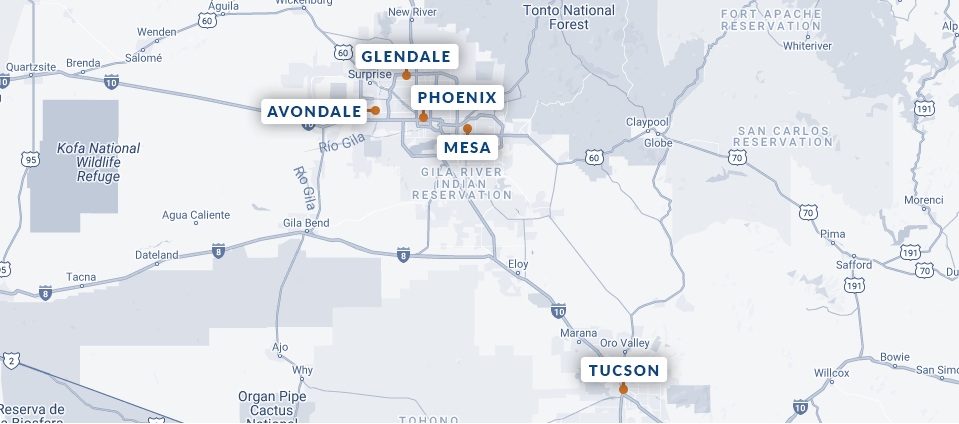
My AZ Lawyers represents divorcing clients across Phoenix, Mesa, Tucson, Glendale, Chandler, Gilbert, Tempe, and the surrounding Valley. We offer free consultations by phone and competitive rates. Schedule yours today.
Call 480-470-1504 or schedule your free consultation online.

MY AZ LAWYERS
Email: [email protected]
Website: www.myazlawyers.com
Mesa Location
1731 West Baseline Rd., Suite #100
Mesa, AZ 85202
Office: 480-448-9800
Phoenix Location
343 West Roosevelt, Suite #100
Phoenix, AZ 85003
Office: 602-609-7000
Glendale Location
20325 N 51st Avenue Suite #134, Building 5
Glendale, AZ 85308
Office: 602-509-0955
Tucson Location
2 East Congress St., Suite #900-6A
Tucson, AZ 85701
Office: 520-441-1450
Avondale Location
12725 W. Indian School Rd., Ste E, #101
Avondale, AZ 85392
Office: 623-469-6603
Related Articles
- Arizona Community Property and Property Division FAQs: The foundational framework for understanding which assets are community vs. separate and how courts divide them.
- Keeping Your Business in a Divorce: How Arizona courts value and divide business interests, using the same community/separate property rules that govern real estate.
- How to Tell If Your Spouse Is Hiding Assets During Your Arizona Divorce: Warning signs that a spouse may be concealing or undervaluing the home’s equity during the sale process.
- Dividing Your Household Goods During Your Divorce: How personal property and household contents are classified and split, and the companion decision to what happens with the home itself.
- How Can Debts Impact a Divorce Process?: How shared debt, including the mortgage, is allocated and what happens when one spouse cannot pay.
- Splitting Stock Options In An Arizona Divorce: Asset division for couples with mixed portfolios of real estate and financial instruments.