Table Of Contents
Read This If You’re Considering Divorce During Chapter 13 Bankruptcy
When someone has reached a breaking point with their debts, some of their options may include chapter 7 and chapter 13 bankruptcy. When a marriage has reached its breaking point, sometimes there is no other option than divorce. These legal procedures accomplish far different goals, so pursuing both at the same time can create obstacles. Is it possible to dissolve your marriage after you have already initiated proceedings to clear your debts with your spouse? Read on for more information on this topic. To schedule your free phone consultation with an Arizona bankruptcy lawyer, contact My AZ Lawyers at 480-470-1504.

What Are The Options For Divorce During Chapter 13 Bankruptcy?
If a married couple in a joint chapter 7 bankruptcy wanted to get divorced, the general guidance would probably be to wait it out until the case has been discharged. Chapter 7 cases resolve within several months, and the debtor can stay on top of case updates to avoid delays. But chapter 13 bankruptcy is a different story for various reasons. The first and foremost of these is that chapter 13 bankruptcy lasts 3 or 5 years, if completed successfully. Significant changes in household income and expenses can also make continuing with a chapter 13 bankruptcy payment plan infeasible. Below are some of the options a married couple in joint chapter 13 bankruptcy can consider if they also wish to get divorced:
- Switching from a joint chapter 13 bankruptcy to two separate chapter 13 bankruptcy cases. This is known as bifurcating a bankruptcy case, because the case is split into two. This is ideal for spouses who need to divorce promptly and clear debts, but either don’t qualify for chapter 7 bankruptcy because of income, or have secured and priority debts that wouldn’t be discharged in chapter 7 bankruptcy. The spouses must have sufficient income individually to pay for mandatory debts to qualify for a chapter 13 case bifurcation. The spouses can also dismiss their chapter 13 case and file new cases individually if bifurcation isn’t a workable option.
- Switching from a joint chapter 13 bankruptcy to two separate chapter 7 bankruptcy cases. A married couple may not have qualified for chapter 7 when they originally declared bankruptcy, but would qualify as individuals in two separate households after divorce. Like switching to chapter 13 separately, the spouses can voluntarily dismiss their initial case and re-file two separate chapter 7 cases if bifurcation isn’t possible.
- Converting a joint chapter 13 bankruptcy to joint chapter 7 bankruptcy. Chapter 13 debtors sometimes have the option to convert to chapter 7 bankruptcy if a change in financial circumstances qualifies them to do so. Divorce counts as one of those significant changes in financial circumstances. Here, the spouses will still need to wait to file for divorce, but chapter 7 bankruptcy concludes much faster than chapter 13 bankruptcy. It can make the divorce process easier, as debts need to be split during property division just like assets. Clearing debts before divorcing removes an item from the to-do list, and helps saves on the corresponding attorney’s fees.
- Dismissing and not necessarily re-filing. Depending on how a married couple’s debt is made up, it might not be as crucial for one of the spouses in a marriage to continue with bankruptcy after divorce. Here, the spouses may want to dismiss the chapter 13 bankruptcy, get divorced, and then the spouse with debt can clear it on their own in an individual bankruptcy filing. However, it’s important to understand community and separate property debt before utilizing this legal strategy. Even if only one spouse agreed to take on a debt, it could become both spouses’ liability due to community property laws. Even if that spouse agrees to take responsibility for those debts during property division, the creditor isn’t bound by divorce decrees and can pursue the other spouse for repayment after the bankruptcy has been discharged.
Qualifying For Chapter 7 Bankruptcy After Divorce
Whether or not a spouse is included in a chapter 13 bankruptcy, their income must be included in household income calculations. In dual-income households, it can be particularly difficult to qualify for chapter 7 bankruptcy. But if a household splits into two, affording a chapter 13 payment plan becomes harder, while qualifying for chapter 7 bankruptcy may become the better option. Even if the spouses individually don’t qualify for chapter 7 using a median income comparison, divorce may increase expenses enough for them to qualify using the means test. In such cases, chapter 7 bankruptcy attorneys can help navigate the complexities of the process.
The means test is an essential bankruptcy calculation which is used to find a debtor’s disposable monthly income, or how much they theoretically could put towards paying off their debts each month. It is found by subtracting monthly expenses from average monthly household income. Not all expenses will qualify for the means test- they must be necessary for a reasonable standard of living. A debtor should hold onto receipts during this time frame in case there are any questions about their spending and the means test. Some of the expenses typically considered reasonable in the means test for bankruptcy include:
- Home mortgage
- Car payment
- Child support
- Spousal support
- Back tax payments
- Child care
- Student loans
- Involuntary deductions
- Health insurance
- Care and education for someone with a disability
- Charitable contributions
- Special circumstances
- Transportation
- Food
- Housekeeping supplies
- Clothing
- Utility expenses
If average monthly household income, which may be lower after dividing into two households through divorce, minus reasonable expenses as described above results in a negative number, the person conducting the means test should be eligible to file for chapter 7 bankruptcy. They will also want to confirm that their assets will be protected by state bankruptcy exemptions if they convert to chapter 7 bankruptcy. This is less of a concern in chapter 13 bankruptcy because debts are repaid. Other factors may apply, such as waiting periods if the debtor has previously filed for either chapter 7 or chapter 13 bankruptcy.
Have More Questions About Divorce & Chapter 13 Bankruptcy? Contact a Full-Service Law Firm for More Information.
It’s already hard enough to learn everything you need to know about chapter 13 to make an informed decision about declaring bankruptcy without considering the potential for a divorce during the payment plan. These are the types of issues that lead to chapter 13 bankruptcy cases having high dismissal rates. The odds of dismissal become even higher when a debtor files for chapter 13 bankruptcy without a reputable bankruptcy firm in their corner. Filing for bankruptcy can be simpler and affordable than you may think when you hire a high-quality Arizona law firm for your case. My AZ Lawyers has years of experience helping individuals and married couples navigate the vast complexities of chapter 13 bankruptcy to achieve the best possible debt relief results. We do it all at affordable prices that make it easier to fit lawyer representation into what already may be a tight budget. Want to discuss your financial situation to see how chapter 13 bankruptcy and divorce could change your life? Our top rated Arizona law office starts the process with free consultations by phone. Get scheduled with My AZ Lawyers today by or calling 480-470-1504.
SLIDESHOW SUMMARY


LISTEN TO THE PODCAST VERSION OF THIS ARTICLE

MY AZ LAWYERS
Email: [email protected]
Website: www.myazlawyers.com
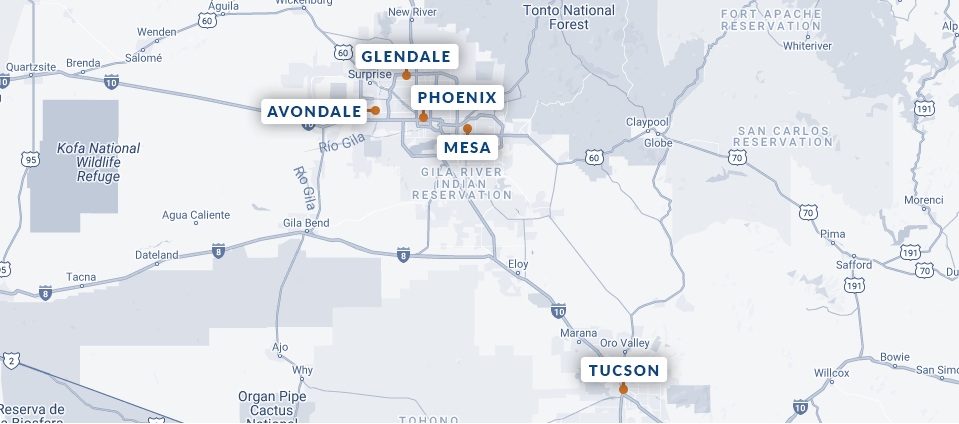
Mesa Location
1731 West Baseline Rd., Suite #100
Mesa, AZ 85202
Office: 480-448-9800
Phoenix Location
343 West Roosevelt, Suite #100
Phoenix, AZ 85003
Office: 602-609-7000
Glendale Location
20325 N 51st Avenue Suite #134, Building 5
Glendale, AZ 85308
Office: 602-509-0955
Tucson Location
2 East Congress St., Suite #900-6A
Tucson, AZ 85701
Office: 520-441-1450
Avondale Location
12725 W. Indian School Rd., Ste E, #101
Avondale, AZ 85392
Office: 623-469-6603