Table Of Contents
Splitting Stock Options In An Arizona Divorce
It’s common for larger companies to compensate employees, especially in tech and corporate leadership, with stock options. This can be an attractive benefit to someone with long-term career goals. But they can also be complicated to split during property division if the employee ever gets divorced. Stock options are an asset that need to be considered when a married couple files for divorce in a community property state. But there are different methods for dividing this type of asset that can be tricky to apply in practice. If you need assistance with these calculations or any other issues throughout the divorce process, our Arizona family law team is passionate about achieving the best possible legal solutions for our clients. Take the first step with your free consultation by phone today at 480-470-1504.

Community Property Division
It’s important to understand some community property basics before diving into how to split stock options in divorce. Arizona is a community property state, which is a less commonly used method of property division in divorce than equitable division. In community property states, assets acquired during marriage are considered to be owned equally by both spouses, no matter whose name is on them. The same concept applies to debts acquired during the marriage. There are exceptions for assets acquired during the marriage via gift or inheritance. Any assets a spouse acquired before marriage are considered separate property. So are assets acquired after a petition for divorce or legal separation has been filed.
When a married couple gets divorced in a community property state, they can walk away with their separate property assets intact. When the spouses can’t come to an agreement on property division, the court will award each spouse 50% of the community property estate. But if the spouses can reach an agreement outside of court, they can divide their assets in any way they see fit. Spouses in community property states should also consider the possibility of their separate property assets becoming commingled with community property assets during their marriages.
The Van Loan Approach
The Van Loan Approach for splitting stock options in divorce should be used when the employer awarded stock options as a reward for past performance already completed. It can also be considered deferred compensation. It is also sometimes referred to as the Hug Rule. The Van Loan approach to finding the community property share of stock options involves dividing the number of months of marriage during employment by the total months of employment up to vesting, then multiplying that by the total number of shares. With this approach, the size of the community share will depend on whether the employee started their job before or after getting married. The community share should be divided equally between the spouses, or one spouse can cede another community property asset to retain the full stock options.
The Nelson Approach
This formula is derived from a California case with a couple surnamed Nelson. While California law isn’t binding in Arizona, it is also a community property state, so the same concepts can be applied. The Nelson approach is used for stock options meant to incentivize future performance. Using this approach is considered to be more favorable to the employee spouse, so consider your position wisely before arguing to use this method of splitting stock options in divorce. To calculate the community property share of stock options with the Nelson formula, one should first divide the months from grant date to the date of the divorce petition filing or service by the months from grant date to vesting date. That figure should be multiplied by the total number of shares. This formula doesn’t factor in time worked at a company before a grant for stock options was issued since it is meant for compensation as future performance as opposed to past performance.
Reading the Grant
When stock options are on the table in divorce, both spouses will be fighting to use the division approach more favorable to them. But when the approach used is in dispute, the court looks at the evidence to choose rather than emotional appeals. One should look at the language used in the grant to determine which approach to dividing stock options in divorce is most likely to be chosen.
As discussed above, the Van Loan method is used when stock options are meant to reward an employee for past performance, and the Nelson method is used when they are meant to reward an employee for future performance. So if a grant contains language like, “For your hard work in 2026,” this denotes past performance, and the Van Loan approach should be applied. But if the stock option grant is dedicated to the employee’s continued success in the new year, this indicates that it is meant to compensate for future performance, and the Nelson formula should be used.
Another area that should be analyzed is the vesting schedule. Cliff vesting and graded vesting stock options can be treated differently in property division. If, after reviewing all of these factors, a method to divide stock options can’t be chosen, an expert may need to be brought in to give testimony. This can be a forensic accountant or a Certified Divorce Financial Analyst, or CDFA. This expert can run both formulas and let the court know which, in their professional opinion, would divide the stock options more equitably. While it can bring clarity to a divorce case, it will also increase legal expenses.
The Constructive Trust
When stock options are granted as RSUs, or Restricted Stock Units, they typically can’t be disbursed to anyone besides the named employee. This doesn’t exempt them from being a community property asset subject to division in divorce. To get around this obstacle, courts will order the creation of a constructive trust to help split RSU stock options. Here, the employee spouse technically holds the stock options in a trust until they are vested. After vesting, the employee spouse can deduct taxes but then must disburse the funds to their ex or their heirs. These funds are taxed upon vesting, and the trust should contain language for who is responsible for paying those taxes.
Stock Splitting in Divorce is Complicated. Retaining a Skilled Arizona Family Law Team Should Be Simple.
Depending on how long you’ve been married, divorce could mean uprooting your whole life and splitting assets you have spent years working to build. The entire experience can be confusing, overwhelming, frustrating, and draw up other negative emotions that can cloud your judgment during already complex legal matters. This is just one of the many reasons you may fare better during divorce if you retain experienced family law counsel. You may have crucial child custody and child support matters on the line as well. Unless you want to handle all of these issues on your own, it will be your job to go out and retain a divorce attorney. Our firm strives to be your most appealing option, offering free initial consultations by phone and competitive rates. Schedule your free consultation with My AZ Lawyers today at 480-470-1504 for more information.

MY AZ LAWYERS
Email: [email protected]
Website: www.myazlawyers.com
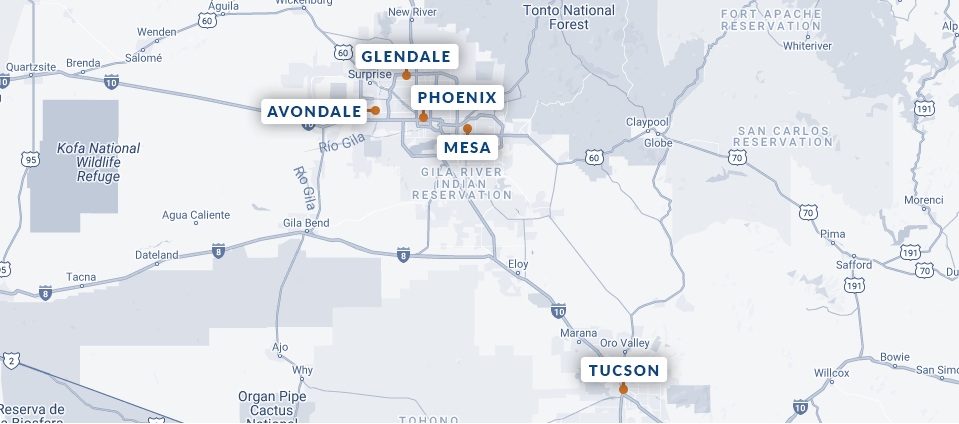
Mesa Location
1731 West Baseline Rd., Suite #100
Mesa, AZ 85202
Office: 480-448-9800
Phoenix Location
343 West Roosevelt, Suite #100
Phoenix, AZ 85003
Office: 602-609-7000
Glendale Location
20325 N 51st Avenue Suite #134, Building 5
Glendale, AZ 85308
Office: 602-509-0955
Tucson Location
2 East Congress St., Suite #900-6A
Tucson, AZ 85701
Office: 520-441-1450
Avondale Location
12725 W. Indian School Rd., Ste E, #101
Avondale, AZ 85392
Office: 623-469-6603